

Welcome to the Great Eastern Railway Society website
We hope visitors will find plenty of interest about the former Great Eastern Railway (GER), its predecessors, successors and related railways in the East Anglia area.
The Society caters for all aspects of the railway, both historical and modern day. We take an interest not only in the GER (1862-1922) but also its predecessors such as the Eastern Counties Railway and its successors including the GE Section of the LNER and BR, right through to the present day Network Rail and the Train Operating Companies. Other associated railways in the region are also covered, including the London, Tilbury & Southend Railway, the Colne Valley and Halstead Railway, the Mid-Suffolk Light Railway and the Southwold Railway.
Our members include general enthusiasts, serious railway researchers, ex-railwaymen, dedicated railway modellers, owners/users of ex-GER buildings and librarians/archivists. So browse the site to see how the Great Eastern Railway Society (GERS) can help you.
The GER Society
The Society was formed in 1973 in order to promote a widespread interest in the Great Eastern Railway, to encourage and co-ordinate research into its history, and to provide a permanent record of the results. This is being achieved by building upon the knowledge of the known GER experts, and by locating and studying all surviving records of the railway...
The Great Eastern Railway
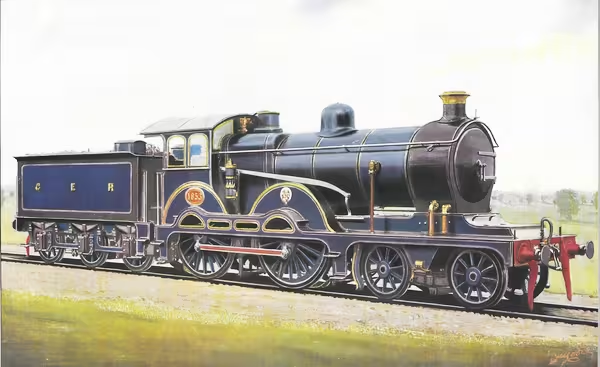
The GER was created in 1862 from the amalgamation of most of the then existing smaller railways in East Anglia. From then until absorption into the LNER at the 1923 Grouping, it was the dominant railway company in East Anglia, only facing competition from the Midland and Great Northern Joint Railway to the north and the London, Tilbury and Southend Railway to the south. Although not a wealthy railway, by 1923 it had more passenger traffic than any other constituent company and possessed the greatest number of carriages.

Sales
We have a vast selection of sales items you can buy on this website. This forms an important part of making information about the GER and related railways accessible to all. Products are available as digital PDFs, CD/DVDs and on paper.
Journal and News
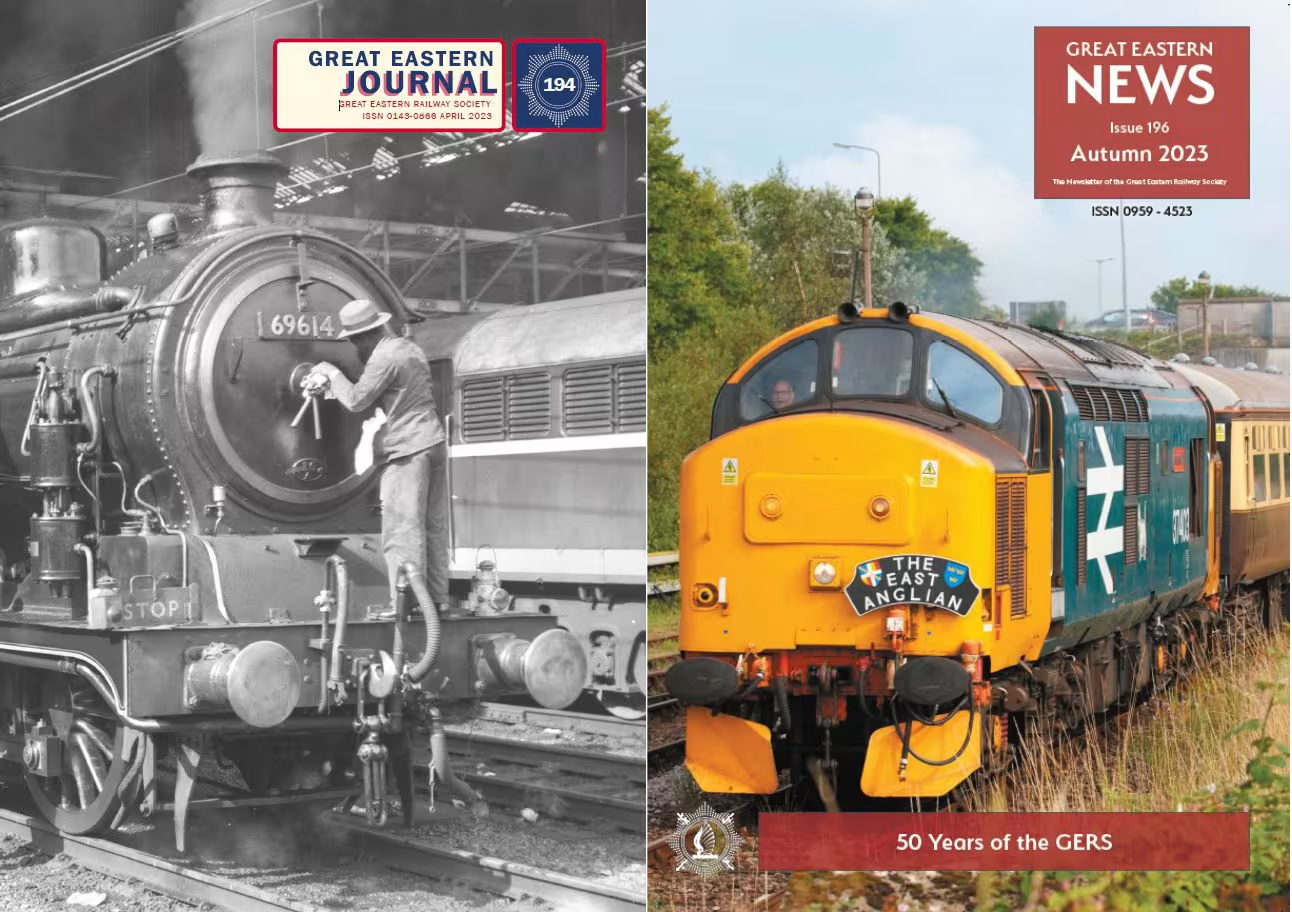
Membership of the Great Eastern Railway Society includes a subscription to the Great Eastern Journal and Great Eastern News, both published quarterly. They are both produced to a professional standard, rivalling the quality of commercial magazines.
The Collection
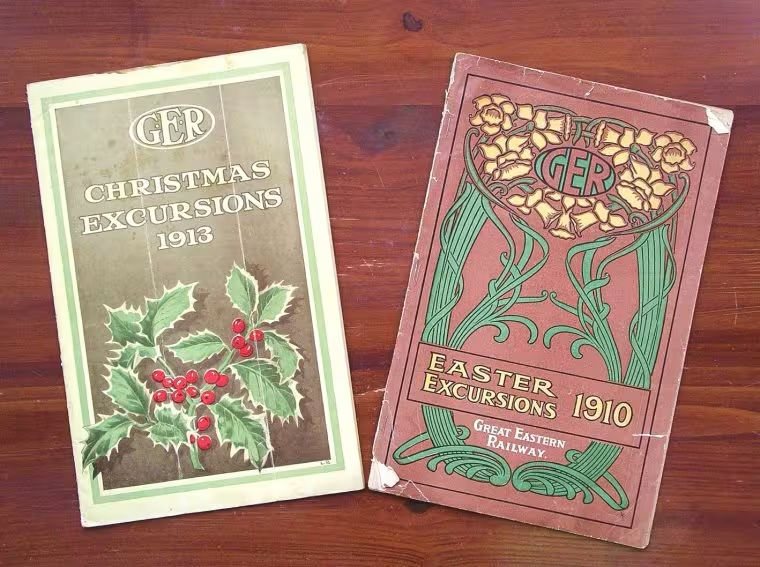
One of the Society's major achievements is the establishment of its Historical Collection of Records. Together with other record at the NRM, much of the company's history is available to all.
Locomotives
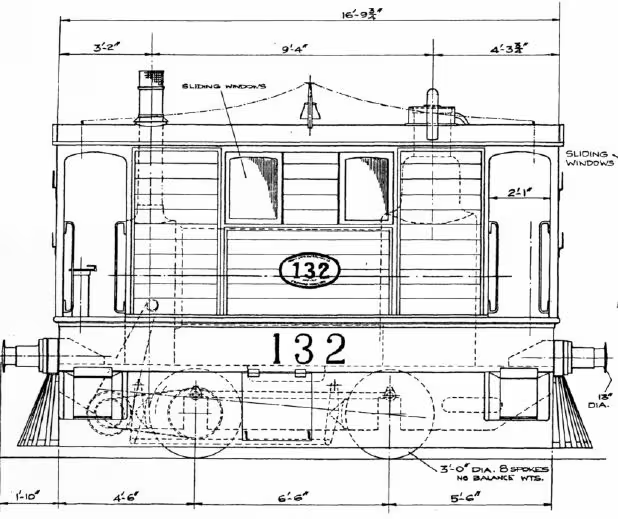
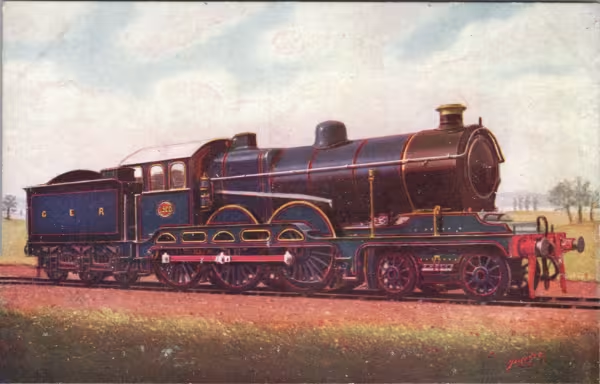
The GER is remembered for its long-lived locomotives. The Claud Hamilton 4-4-0s and the '1500' 4-6-0s were the epitomy of Pre-Grouping elegance. Many smaller locomotives were well matched to the traffic demands varying from mainline freight through to lightly-built cross-country routes and branches, including tramways and light railways.
Modelling
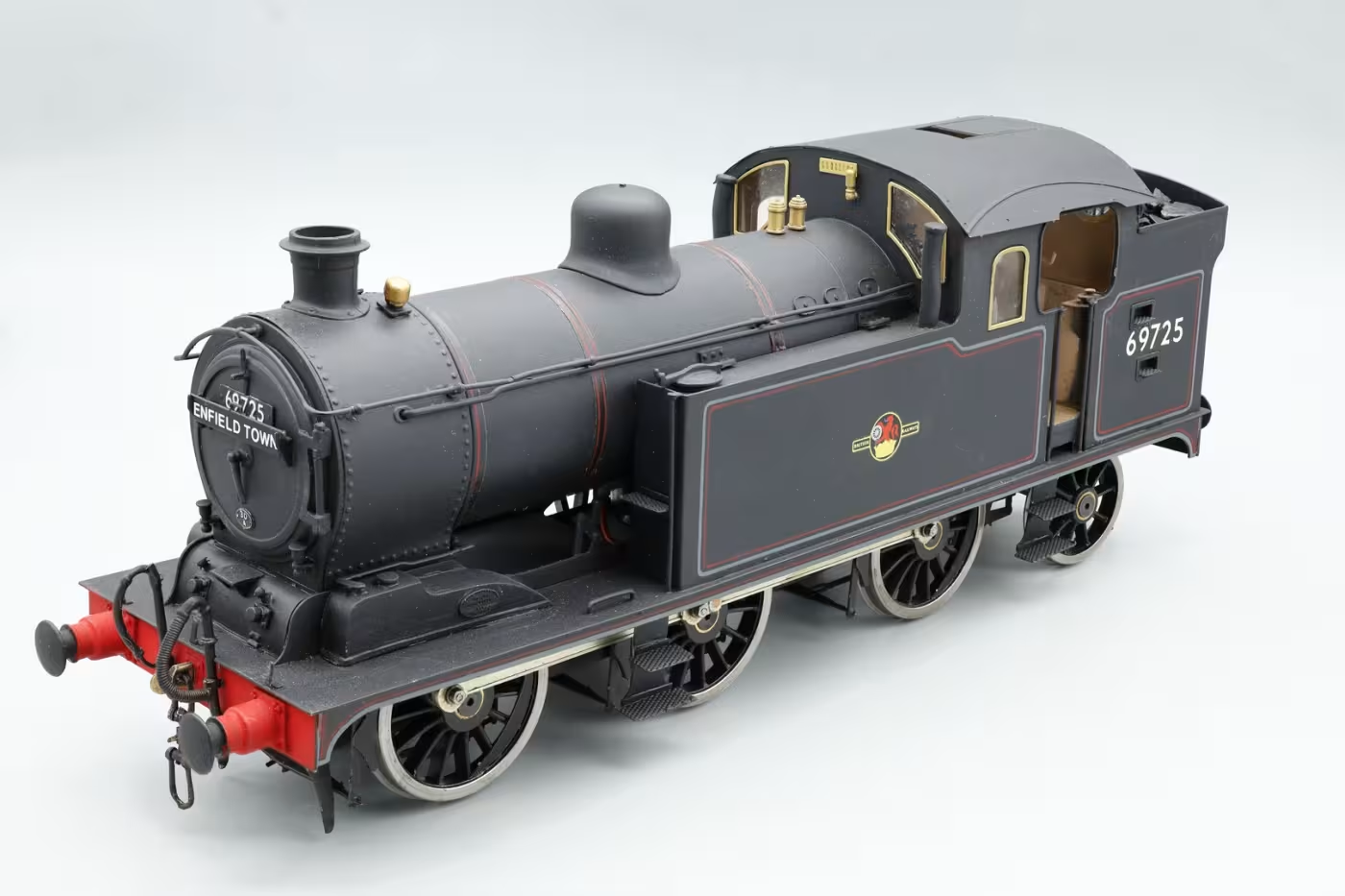
When the Society was founded, one of the priorities was to support those who model the GER. We continue to have a thriving modelling community who exchange information through our Forum. They have created a Showcase which contains many layouts of, or inspired by, the diverse railways of East Anglia and East London.

E-Group and Forum
Members can interchange ideas and information with each other through our E-Mail list based on Groups.io (The E-Group) and our Forum hosted on this website which is popular with our modelling community.

Official Facebook page
The Society has a Facebook group which is occasionally used for announcements.
X (formerly Twitter)
We also have a page on X (Twitter) with postings of general interest to railway enthusiasts.
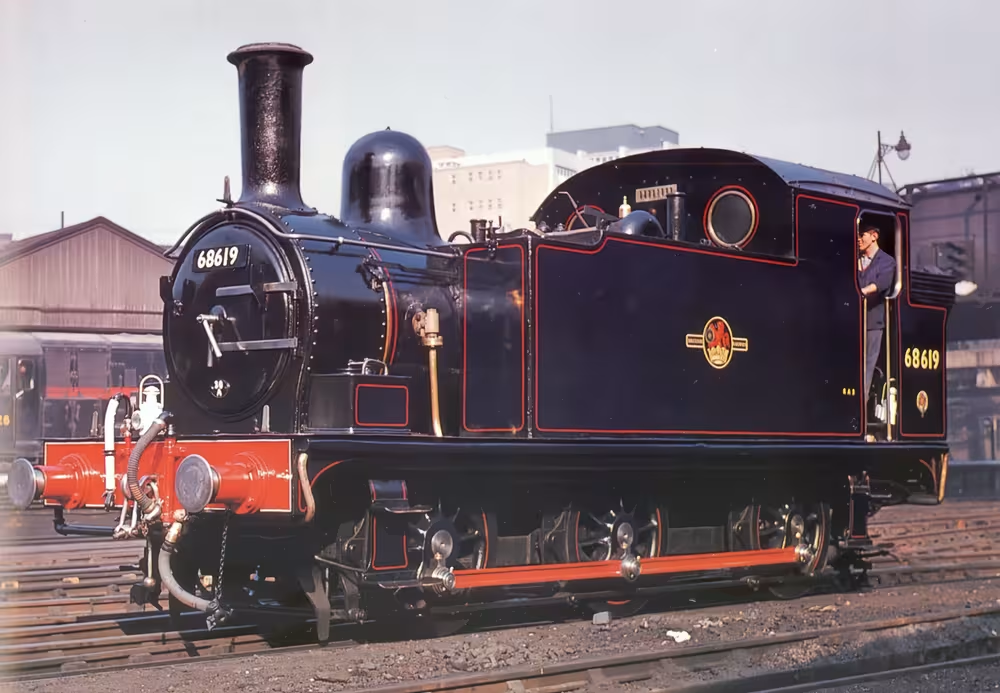
Great Eastern Railway Appreciation Group
We also recommend this Facebook group for those interested in the GER.
Latest News
AGM 2026
The 2026 AGM of the Great Eastern Railway Society will take place on Saturday 14th March.
National Railway Museum Visit 2026
The GER Society is in the process of organising a visit to the National Railway Museum in late May/early June.